IBM released a set of 5 predictions for 2022. Here they are, along with some different perspectives for understanding and interpreting them for your venture or enterprise.
A ‘Slice’ of Reality
A quick word about predictions. Are they true? We of course don’t know. A prediction is simply a mental model, or ‘slice’ of reality. We do not know the future, but we can build models of it to help us understand not only what is ‘not yet’, but how what is happening now could emerge and impact us. IBM has made these 5 predictions based on what it knows now; but each of these predictions have the potential to emerge earlier–or later, of course–and in a more vibrant or different way than predicted.
Opportunities and Threats
Each of these predictions will have further ramifications on the social, political, and existential dimensions of human life. We are often attracted to technological advancements because we envisage them as a panacea for the ills of life. However, there is no evidence that such a belief is true. As we read predictions we must look at both the opportunities and threats that each one presents and poses. If you’re reading a trend that presents a positive view, ask yourself about the threats.
Unintended Consequences
“The road to hell is paved with good intentions.” This is a cliche, but as the case with cliches there is some truth to it–especially with technology and design. We can design something for good, unaware of the potential it has for emerging into something detrimental. “A pessimist sees an threat in every opportunity. An optimists sees an opportunity in every threat.” To design something with the unintended consequences in mind is critical in our world of change and complexity. As you’re reading these trends, look at them from both the optimistic and pessimistic point of view. Ask yourself about the unintended consequences that could arise from each technology.
IBM Predictions for 2022
1. AI Gives Window Into Mental Health Through What We Write:
The written word is nuanced–there’s language between the language between the language. What we write and how we write it can provide a window into our psyche. However, not everyone is able to read between the lines–but an AI certainly can. With the rise of data and how it is being compiled and used in various applications, an AI will be able to detect mental illness in the information it receives from human interaction. IBM predicts that in five years, “What we say and write will be used as indicators of our mental health and physical wellbeing.” There will be ‘applications’–they won’t be called that, but that’s beside the point–that will be able to detect early signs of various cognitive disorders, mental illness, and other ailments. According to IBM’s Study, one in five adults in the U.S. experiences a mental health condition such as depression, bipolar disease or schizophrenia, and roughly half of individuals with severe psychiatric disorders receive no treatment. The global cost of mental health conditions is projected to surge to US$ 6.0 trillion by 2030.”
2.Super Hero Vision
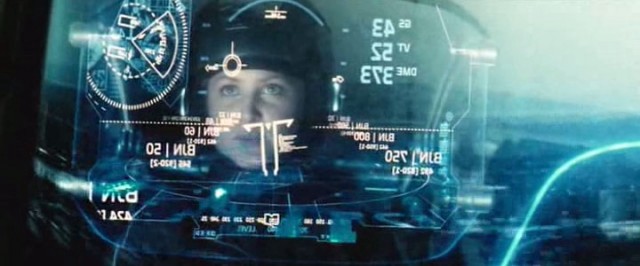
Our eyes have limits. Technology has enhanced those limits for hundreds of years. With AI, enhancement is amplified by an order of magnitude. Hyper imaging will help us see beyond visible light to see into the electromagnetic spectrum that will open to us a whole other realm of perception.
Currently we can see into the electromagnetic spectrum through machines. These simple machines help us see tooth cavities and decay or check bags at an airport. These machines are simple and expensive.
In the near future with the advent of AI, these machines will become better and cheaper. We will see into reality in a completely different way, such as allowing a car to see through fog or enhanced night vision. It’s like we will be given the perpetual power to see through walls.
When implanted in a phone, or embedded chip in your brain, you’ll be able to see into the nutritional components of food. Imagine what it will do to research in sciences! We will be given the tools for perception far beyond what we have the ability for now.
What will this new technology provide? Well, greater vision. But what about the unintended consequences. Here’s a simple one: what is concealment in an electromagnetic society? Anyone will be able to see what you are carrying in your bag or your coat pockets. It’s simple and crude, and there are much greater unintended consequences, but we have to understand the risks this technology will create.
3. Microscopes–How About Macroscopes?
We are able to see detail at the micro-level. We can also see some detail far away with telescopes. But what about macroscopes? Here’s IBM:
[A macroscope] will organize the information about the physical world to help bring the vast and complex data gathered by billions of devices within the range of our vision and understanding. [Unlike] the microscope to see the very small, or the telescope that can see far away, it is a system of software and algorithms to bring all of Earth’s complex data together to analyze it by space and time for meaning.
This macroscope will be connected to all the billions of sensors in IoT to present BIG data in ways we have not seen before. This will be a hyper-bird’s eye view into the world of information. According to IBM, it is working on digitizing the entire world.
Think about that! With such information what will you be able to create? What will you be able to learn? It’s extraordinary. But there is always an underbelly.
What risks does this technology pose? What will you NOT be able to design? Where will this information go? What if it goes into the wrong hands? What will this information do to threaten personal and national security? What will you have to give up for this information to be available? How will this technology impact your company? This data will aid in water irrigation, farming, and other industries.
4. Medical Labs on Chips Will Trace Disease on Nanoscale
This technology has been predicted by Ray Kurzweil for many years–nevertheless, it’s shocking to see that it will be available in only 5 years from now. The key is to shrink down to a single chip all the technology necessary to diagnose a particular disease. Where this will lead is to nano technology that will enter the body and provide treatment. It could also be combined with genetic technology that will remove the genes causing the disease in the first place.
What will such technology do for human longevity. We already have people being born today that, apart from a global catastrophe such as a nuclear disaster, will live until 300-400 years old. When we can quickly diagnose, and on a genetic level remove disease, we will be closer to living for hundreds of years.
Think about this on a social and economic scale? What will work look like when people are living for so long? What will social services, geriatric care, seniors’ living look like? What are the opportunities and threats for this scenario?
5. Smart sensors will predict environmental pollution at the speed of light
These tiny sensors will be able to predict gas leaks in real time. This would be around natural gas extraction wells, pipelines, and around storage facilities.
Networks of IoT sensors wirelessly connected to the cloud will provide continuous monitoring of the vast natural gas infrastructure, allowing leaks to be found in a matter of minutes instead of weeks, reducing pollution and waste and the likelihood of catastrophic events.
This may not sound like a big deal, but what else could these smart sensors predict? What about nuclear leaks? There are also so many natural disasters taking place from floods to tsunamis. Could these smart sensors be used to predict those calamities as well.
These are just five predictions. The point is not to camp directly on these, but to use them to build models with about the future. How will your business enterprise, your city, your educational institution be impacted by these predictions if they were to take place?
And, how could you stretch those predictions into scenarios that can be used to plan your next venture or enterprise? This is where you can turn simple information into a valuable and critical tool.


 Kultur Design Blog