4 Key Ways People Will Become Super Human

081312-the-matrix

As a consulting company, it’s important for me to research broadly; to get a sense of the future. Any company needs to be doing this. If you are a business manager or business leader, and you’re not researching the future, you are missing a critical task. The future is moving very quickly. If you’re more concerned about creating solutions for today and not attuned to what’s happening in the next 5-10 years, you are creating blind spots that could lead to market share losses and even the death of the enterprise.

One rapidly growing area of technology is human enhancement. I wrote in a previous post that Elon Musk claimed that those who do not enhance will be irrelevant, which points to the tremendous pressure foisted on humans by technology itself.

Why people will want to enhance

There is a growing desire among people to transcend the limits of being human. People want to be rid of pain; people want to defeat death; people want to wield extraordinary intellectual power; people want their bodies to rival those of gods in ancient mythology; people want to become super-human.

Some wonder if there’s enough time for humans to enhance themselves before the next wave of AI enslaves us, wipes us out–or both. The main thing is intelligence; for if a robot can think faster and in a more complex manner than you can, how will you prevent yourself from becoming a slave?

There are thought leaders such as Bill Gates, Ray Kurzweil, and Elon Musk who claim that with the rise of artificial intelligence–the raw power of computer intelligence that’s set to grow at an exponential rate–the only way for humans to survive is to technologically enhance their biology. According to Fortune Magazine, the artificial intelligence industry–buoyed up by top CEOs like Jeff Bezos and Alphabet’s Sundar Pichai–is set to become at least a $70 Billion industry in just 4 years. A huge spike from a merger $8 Billion only 3 years ago!

In the book “Our Final Invention” James Barrat argues that we are creating the engines of our destruction. Put simply, the AI project’s objective is to create machines that have human consciousness. If this is the case, Barrat argues, they will have a self-preservation mechanism–part of their consciousness will be to ensure their own survival. Therefore, once conscious AI see humans as a threat–as having the power to press the shut-off switch–they will do all they can to thwart us, if not destroy us. Barrat claims that indeed we’re too late to stop it; the engines of creation will not be stopped. And with that being the case, we must either enhance ourselves or perish.

4 ways to enhance

How will people enhance in the next several years? Here are 4 ways:

1. Brain enhancement

Whether by prothesis or a chip implant, technologists have been working on this kind of technology for a long time. The key to chipping up your brain is to plug into the internet’s vastly growing knowledge ecology that will enhance your ability to think, make decisions, and access knowledge. Brain implant surgeries have already been achieved, and patients are learning how to work with a computer as it makes decisions for them. As the computers become faster and more powerful, the enhanced human brain will become in turn faster and more powerful.

2. Body enhancement

Again prosthetics is key here–think bionic man in the 21st Century. Humans are enhancing their bodies all the time through drugs and advanced physical training regimens. But as these technologies improve, humans will be able to alter their bodies in outstanding ways. Indeed, human bodies wear out. According to Ray Kurzweil, with nanotechnology, humans will be able to have ‘nano-skin’–skin made out of tiny robots that will regenerate it, heal it, and change its look and feel. Want to be someone else for a period of time? Just reprogram the nanoparticles.

3. Immortality

Aubrey de Grey is one of the pioneers of immortology–yes, the study of living forever. He believes we need to defeat the notion that death is an immutable characteristic of human existence. He is thus waging a techno-war against death and dying. According to de Grey, Kurzweil and others, with the advancement of medical technologies, and the exponential growth of technology in general, humans will be able to ride the longevity wave for the next thousands of years. Some are claiming that this generation of children will live into up to 300-500 years. De Grey’s argument is simple: If wellness technologies can increase your life-span by 10 years, you have been given 10 more years of technological development; and within those 10 years, wellness technologies will give you an additional 25-50 years; and within that 25-50 years, wellness technologies will be able to buy you another 100 years; and within that 100 years, wellness technologies will be able to buy you another 1000 years–and so on and so forth. A significant area of medical practice for this is gene therapy. As genetic technology grows, so does the ability for doctors to eliminate the kinds of genes that cause cancer, heart attack, stroke, alzheimers, etc.

4. Virtual Reality

This is another area that technologists are looking to for enhanced human experience: to live on the internet; to have oneself connected to the internet through brain implant technology. Already, virtual reality is being designed with a high level of verisimilitude to human experience–and it will only advance. According to Ray Kurzweil, humans will be living, working, playing, and travelling in virtual environments. Moreover, this will be a way he sees the ability of bringing people back from the dead, namely by reconstructing humans based on information left behind after their death, and recreating their bodies and brains. Once we are able to fully reverse-engineer and re-create the human brain, we’ll be able to bring our dead loved ones back to life by recreating them as avatars.

“Any sufficiently advanced technology is indistinguishable from magic.”

-Arthur C. Clarke

What are the threats to human existence that these technologies pose? Some maintain that when we enhance our brains to such an extent, we’ll be running so much information through them we’ll inflict further harm on our minds and bodies. We’re already the most medicated society in human history, largely due to the demands technology is imposing on our limited bodies. “Humans are slow,” claimed the interviewer in the clip above with Elon Musk–humans are slow. Another scenario could be that your brain will become easily hackable, not unlike your mobile phone or automobile.

This is important information. It’s important for us as human beings to understand where technology is going and where it is leading us. That’s right–leading us. We are driving by the technology we have created, and we are reaching a tipping point at which the engines of (our) creation are going to run us even more than we could ever conceive.

People like Elon Musk and Ray Kurzweil and Stephen Hawking may sound crazy making claims of human irrelevance and killer robots, but that’s because they see so far into the future, they have such a grasp of the unintended and intended consequences of technology–far beyond the common person. And that’s why it’s important to listen to these voices and consider them when making plans for the future.

If it still sounds crazy, just remember the famous quote by Arthur C. Clarke:  “Any sufficiently advanced technology is indistinguishable from magic.”
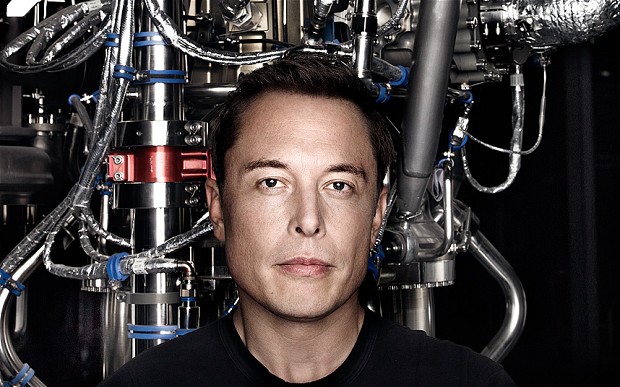
 

Elon Musk Warns All Humans: Merge with Machines Or Become Irrelevant.

elonmusk

What used to be a weak signal is now becoming a very strong one: According to Elon Musk, humans must merge with machines or become irrelevant. This used to be covered by alternative publications like MIT Tech Review, and now are hitting mainstream media headlines, such as CNBC.

The billionaire, and founder of some of the most dynamic companies of the 21st Century, gave a talk today at the World Government Summit in Dubai. “It’s mostly about the bandwidth, the speed of the connection between your brain and the digital version of yourself, particularly output,” Musk claimed. By this he means we’re currently too slow to keep up with the raging speed of AI–and it’s only going to get worse. We’ll need to merge with machines to have a chance at keeping up. Of course, Musks’s fears are not that we’ll be too slow in creating information, but rather that we’ll simply become subjugated–conquered–by super-intelligent beings, ironically of our own creation. He’s always seeing the bigger picture…

This again is nothing new. People like Bill Gates, Bill Joy, and Ray Kurzweil have been talking about this subject for over a decade. But it seems we are at the advent of AI, and that means we have some decisions to make: will we chip up and become requisite with machines, or remain ‘human’–whatever that means anymore–and refuse to enhance? And if we don’t enhance, will we be subjugated?

As well, who will have access to these technologies? Will they be ubiquitous and affordable for all, or merely for the elite? If the latter, what prevents society from becoming split between an intellectual elite few–powered by advanced AI–and the rest? And what kinds of social and political upheaval will such a bifurcation create?

Back to weak signals. Weak signals are like the ‘black swans’ that Nicholas Nassim Taleb wrote about in his book The Black Swan: The Impact of the Highly Improbable: they are events that are typically under the radar until it’s too late; they are low frequency in information, yet high magnitude in impact. Right now, the human/machine divide is becoming mainstream, but what ramifications of this phenomenon are yet to reach the surface of popular consciousness? What will be the next black swan, the next event that may be highly improbable now, but inevitable in hindsight?

For those business leaders, this kind of thinking and researching is critical to remain viable in the 21st Century. If you’re not thinking this way, your business enterprise could be in jeopardy.

Being on the right side of change means taking articles like the report on Musk’s latest statements and pushing them into the future. You have to ask yourself how widespread brain implants will create threats and opportunities for you and your organization.

How Playing, Messing Up Your Desk, and Napping Will Totally Boost Your Creativity.

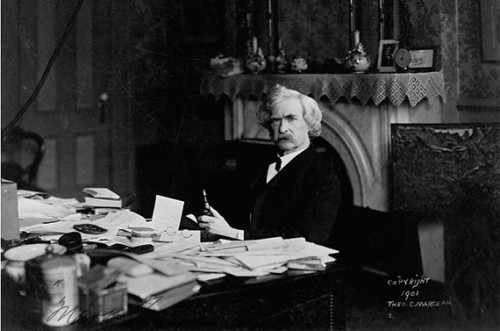
mark-twain-desk-e1388429797580

Creativity can be taught. It’s not something that only the gods have bestowed on a handful of artists, writers, composers, or rock n’ roll CEOs–it’s in everyone, and can be harnessed and learned and actualized in many different contexts. Much of my work over the past decade has been teaching people how to become more creative–that is, how to bring out of themselves what they have already been created with.

And because creativity is already in you, it doesn’t take a whole lot to get started.

Here are a few things to get your creativity fuelled up. They’re simple, and perhaps even ridiculous–that’s precisely the point. People these days take themselves way too seriously–just step into most offices these days, and the stale air alone, like anti-bacterial gel, will kill any ounce of creative spirit.

1. Be playful: Life is play, and work ought to be play. Creativity is all about play. Sound childish? It is! In fact, the reason why you’re so plugged up creatively–if you are–is because you were told from grade school on that play is juvenile and that only serious people find success in life. So this first step is to start playing. That’s right, play! A serious jest as the great Goethe called it. You need to think about playing more and not being so serious all the time. Yes, you need to make serious and sober decisions, but you can play to get to that point. What do I mean by play? Find ways to make your work fun. You know, hard work for creatives is often playful work. That’s because creatives–those hired to perform tasks considered ‘creative’, namely designing stuff or writing jingles or designing buildings or apps, etc.–usually incorporate playful activities that most people wouldn’t consider work. What do you find fun? Incorporate that into your work. If playing video games at work gets your juices going, then do it. If reading Wired Magazine and MIT Tech Review give you more ideas, then clip or print out articles and stick them all over your office wall as a collage–and not just a small one, but a big one. Get some legos, bricolage, and other toys in your work space and encourage your team and colleagues to play with them.

But as any chess player will tell you, play isn’t all goofing around and doing what’s thrilling. There’s a seriousness to play. There are moments of intensity, of searching, of solving, of getting stuck unstuck and re-stuck again. There are moments of pain and frustration–and that’s all in the form of a simple game of chess! Think of your life in this manner: not as something to default to, but as something to play through. Creativity is play.

2. Don’t clean your desk: Are you a neat-freak by nature or nurture? If by nurture, lurking under that stapled down attire and polished office space is a clutter-bug who thinks better in the midst of a mess than in neatness. Take a week, and don’t clean your desk–let all kinds of stuff pile all over it, including the Chinese food take-out boxes and chopsticks. You see, ideas need to congeal with other ideas–that requires diversity. What better way to get your ideas flowing than to create divergence on your very desk! Lifehacker has a wonderful article about this, showing how Steve Jobs, Albert Einstein, and other big thinkers worked on messy desks.

And this strikes at the heart of another myth stretched over from your childhood–“Clean that desk!” What if you were told that a messy desk was a good thing? What if you were told that great creatives kept messy desks? What if you saw photos of great creatives desks when you were a child? You’d be keeping a messy desk today, and probably not feeling so cluttered and buttoned down and clamped. If it works for Steve Jobs, why won’t it work for you?

3. Take a Nap–in the middle of a work day: Yup–you’ll probably fear being fired for even thinking about doing this, but it’s one of the most important things you can do in your day for your brain. You need 10-15 minutes–no less, no more. You can do it in your office space–if you have covers for your windows and a lock on your door, or in your car. You can do it on your lunch break or any other assigned break. I’ve written about the wonders of this before, including the names of great thinkers and inventors who swore by it. Thomas Edison took a daily nap. Winston Churchill couldn’t get through his day without taking a nap. There is a ton of research coming out that advocates for naps in the middle of the day, not just to rest but to stimulate brain activity–it actually helps you solve problems. But this is the problem with the modern work environment: it’s more about the appearance of ‘serious’ work than real work itself. Real creative work is messy, intense, and playful–and it even requires taking a nap. I talked to one senior executive who rides Harleys on the weekends, and he told me he’d like to grow out his beard but can’t–it would break office etiquette. Can you imagine? What if growing a big beard somehow made you feel more authentic and gave you greater ideas? Same with naps. People don’t want to take a nap because of how it would appear, not for the value in overall brilliance and productivity it would induce. Think about it…

4. Fail: You know when you’re playing a challenging video game or some other game, and you do better when you just don’t care how well or poorly you’re playing? You tend to take more risks, which at times–but not all the time–lead to openings in the game and new insights. This is the same with creating new ideas. When you think of your work as play, then you don’t worry so much about failing, which enhances your performance. Don’t fear failure.

But this is another problem with the modern workplace: that people don’t feel the freedom to fail. In spite of all the research that shows how reduction in fear of failure leads to greater results, workplaces continue to create cultures of fear. Managers need to give employees plenty of room to fail; to try new ideas out and completely fail them–not on purpose of course, but because they’re pushing every boundary to create something innovative. If you can risk without the fear of failure, you will begin to live a much more creative life.

5. Stay up late: Sometimes you have to shake up the social order of your life. You know when you’re on that business trip or weekend get-away, and you suddenly feel more creative and alive? You feel like you’ve got more ideas and insights? Look at your schedule: chances are you’re staying up later, most likely at a watering hole or restaurant somewhere, and you’re eating at different times of day, and working longer hours. Staying up late can be a great way to get your brain into a different pattern. In fact, when you’re tired, your using different areas of your brain to cognize and interpret your experiences, which is often why you sometimes get clearer insights or better ideas. And I’m not talking about lying on the couch in front of the television, but working on something new or interesting or extra. Too many people veg out in front of the TV till late at night, which actually fries out your creativity, not stimulate it.Try staying up late at least once per week working on real ideas, or reading books you never would have before–books on creativity and innovation–and reap the creative benefits.

We are all creative. The problem is we live in a society that imposes structures and rules and conventions that conflict with, and even thwart, ways of living and being that enhance creativity. And yet, our bosses, jobs, and industries are demanding more and more creativity. To perform in this conflict requires that you change some of your habits and long-held practices–to shake up your life. It may seem scary at first, but you’ll see the results.

10 Strange And Wonderful Things That Happen When You Stay Up Late At Night.

midnight-in-paris-007

I was a night-owl for many years–loved it. But with kids and projects and all the daytime and nighttime responsibilities, I no longer have the luxury of staying up till 3AM. So, over a period of about a month, I transformed from a night owl to early bird, rising between 5:00 and 5:30 to work on things for which I need plenty of time and (quiet) space.

Sometimes, especially on weekends, the night owl emerges, and I find myself up way past my bedtime with the house still and the sounds of exhales from the rest of my household in slumber. There’s something beautiful about the nighttime silence–something that gets my creativity going. Here are some things I (still) love about being a night owl:

1. It’s quiet: When you’re up past midnight, it’s likely you’re alone and the rest of the family is in bed. It’s peaceful. One can get a lot of thinking done with such peace and quiet. It’s one of the only times of day when one can get some real deep thinking and creating done–all that beautiful quiet. The best is not to try to fill it with anything; but if you’re inclined to fill it, to me there’s nothing like a late night jazz radio show–the sound of the city is what I call it. There’s also the late-night radio shows about bizarre phenomena, things that are too uncanny to listen to and take seriously during the light of day. But I’ll just stick with the quiet.

2. Nurturing: This might be a cheezy way of putting it, but there’s a way in which the night has a cozy factor–it’s a time when blankets can be placed over you while you’re huddled over a book, TV or computer screen. This kind of coziness is a by-product of peace and quiet. To me, there’s nothing like putting this coziness in tension with a thriller novel or spy movie. One of the best moments like this was reading Joseph Conrad’s classic ‘Heart of Darkness’ while under the covers at 1AM–something about drifting along the river of the Congo on some strange voyage while also being nurtured by the warm duvet of bed.

3. Productivity: As mentioned, you can get a lot done when there’s no one to bother you. As well, the darkness of night provides a frame of deep focus–you’re not distracted by salubrious sunbeams or frolicking squirrels across your roof, or bird songs out your window. You’re in flow. The night can bring on flow, real flow. There’s no other sound but the tapping of your computer keys or the scratch of your pen or pencil along the notebook. There’s a reason why many creatives love to create at night.

4. Nowhere to go: You have nothing scheduled at this time–it’s time out of (scheduled/arranged) time. As such, you can relax, be in the moment, think, do. This is an important thing, for many of us use schedules and meetings and busy-ness to distract us from our creative work–what Steven Pressfield calls ‘resistance’. This resistance is a killer of creativity, which is why, again, a lot can get done after hours.

5. Stretch the day out: If you feel you don’t have enough hours in the day, usurp your usual 10PM bedtime for 1:30AM. There is indeed a sense that night owls have that the day is something whose every droplet one must squeeze and drain out. This is a way to truly seize the day. Need to stretch it out even more, pull a full all-nighter then get dressed, quaff down a quad espresso and head back out to work. You’ll notice that you won’t be that tired, and in fact you’ll be in a heightened state of awareness.

6. Sleep is better: When you hit the hay after a late-night work session, and you’re head feels like it’s going to split open, and your heart is beating heavy, the bed just feels that much better. Sleep after a time of creative productivity is sweet indeed.

7. New ideas: There is something strange that happens when you’re up late–you have different kinds of insights. It’s like the profound fatigue you’re feeling opens up another dimension of thinking. Many of us are too into our routines and schedule and obligations to engage in deep creative thinking. But when you’re up late and wandering around your place while everyone else is sleeping, your mind takes all that it was filled with over the course of the day and starts amalgamating it together–similar to what happens in dreams. It’s pulling yourself outside of your day that the ideas start to congeal. This is the zone of insight.

8. Sleep in: Night owls tend to sleep in more, which creates the conditions for fresher ideas. There’s something about lying around in bed that gets the brain moving and conjoining all kinds of disjointed thoughts. I find laying around an extra hour in bed in the morning to be very productive–if I have a notebook near by. And that’s the key: keep a notebook handy to jot everything down in. Your phone or tablet’s not good enough–you need a notebook and pen or pencil; for there’s something important about the kinetic act of writing than simply tapping on a piece of glass that gives you greater insight.

9. Be in good company: By becoming a night owl, you can join the ranks of Charles Darwin, Winston Churchill, and yes even Keith Richards. There is an entire history of night owls–those who have plumbed the depths of night to emerge with great jewels of creativity and imagination.

10. Noctambulism: If you want to read something interesting about night owls, read about Charles Dickens’s night walks, or those of William Blake and other noctambulists. There is indeed an art to walking at night, and there are many artists and creatives who relished their times wandering the streets at night: the city lights, the late-night cafes and bookshops, the theatres–the energy of it all. At least on one occasion, Dickens was known to have walked the entire night–a feat that left him energized yet exhausted.

Secrets to powerful meetings top CEOs don’t want you to know

design_meeting_team.jpg

Meetings are at times necessary; some, however, are just plain time-wasters. Sometimes I wonder if workplaces exist to hold meetings–really long ones with plenty of sweet carbohydrates and coffee. If a meeting is necessary, these few tips will help you make the most of it–especially if it’s with 3 or more people.

I’ve worked with Fortune 500 CEOs and global think tanks. Here are some secrets I picked up along the way:

1. Read up: What do you need your team to know ahead of time? Rather than brief them on it in the meeting, send it to them as read-ahead material. This can be anything: documents, articles, news headlines–whatever will be pertinent to the meeting, have your team read it before-hand.

2. Rules of the game: Every game has a set of rules–meetings should too. If you want honest work, you have to create the space for honesty. One rule you can have is ‘whatever is talked about in the meeting stays in the meeting.’ Or, there’ll be no recourse for honesty. You want to have your team candidly, but respectfully, giving their input. This requires very clear rules and boundaries.

3. Get a facilitator: If you’re working through some really complex issues, consider having a paid facilitator to serve as an objective voice and ‘referee’ as it were. Often a leader has blinders on that block him/her from seeing the issue objectively. As well, if there are team dynamics that create barriers to a solution, a facilitator can provide a way through that.

4. Document: How often do you leave a meeting and you have little to no record of what was actually talked about? Don’t rely only on your team to take notes; have someone either in the meeting or an outsider be a documenter. You may also want to consider having different levels of documentation, such as video recording, audio recording, minutes taking, etc. If you use whiteboards, make sure someone is responsible for taking pictures of everything.

5. Environment: The location of your meeting will either help our hinder its outcome. Working in a cramped room with low-ceilings and blinding fluorescent lighting will attenuate your outcome. What kind of meeting is it? If it’s a long meeting, consider working in a space in which furniture can be moved around. If you’re in a boardroom and the table can be moved, push it against a wall and use it as a serving table for refreshments. Get large sheets of paper up on the walls and work standing up. Get music in the background that will enhance creative flow, such as baroque. Get bricolage, legos, and other such building materials in the space to get people working kinaesthetically on solving a problem, rather than just in 1-dimension. Make sure there’s plenty of natural light and a variety of plants.

6. Healthy food: If you must have a lunch meeting over several hours, DO NOT serve complex carbohydrates such as pizza, lasagna, spaghetti, large sandwiches, etc–you and your team will be sleepwalking through the afternoon, no matter how much coffee you’ve had. Instead, you want simple proteins–beef, chicken, or fish–and plenty of greens and other vegetables, sprouts, nuts and seeds. This food will give you the energy you need without the glutted belly and drowsiness that come from carbs. And yes, have plenty of coffee and water on hand–tea as well.

7. Divergence: Meetings are often counter-productive when people are using the same thinking to solve a problem that created it in the first place. Too often, people draw on the same ideas and experiences while trying to create something new. To break this habit, you need to get new information in the meeting space, such as books, articles, magazines, and periodicals. Cultural etiquette for meetings is typically that reading during a meeting is rude. Trash this antiquated rule and give your team plenty to read–and give them material totally outside the issue at hand. I’ve worked with many teams that came up with great ideas on medical solutions after reading books on architecture and sea-creatures. It’s called the power of divergent thinking. By introducing divergent ideas and frames of thinking to a problem, the brain is making new connections which produce new ideas.

8. Design: A meeting can stretch on for hours with little result. You need to have a plan–not an agenda, but a plan. A good rule of thumb is to get people working on stuff to report out after a set period of time. Synthesize the ideas, then break out again. If you have 10 people, have two different teams working on stuff. If you have 3-5, break out individually to tackle a different side of a problem and come back to report after a set period of time. Break up the time of your meeting into stages or frames that deal with a different part of the problem.

9. High to low and low to high: You want to work broadly then into greater granularity; by this I mean, if you’re working on a problem, look at the broader social, economic, political, technological issues of the problem. Then, look at how those global issues are impacting your industry; and from your industry, look at your company. From your company, work your way down into your particular department. When you work on your solution, work bottom up from your department to your company to your industry to the world.

10. Cascade: You should think of meetings as cascading from one another. Work on big meta-issues and lower into granular ones; from a large-scale vision to individual tasks. Take the documentation of the last meeting and use it to create the next meeting, that way your solutions will build on each other. Don’t think of one meeting; think of several over the next month that build on each other.

11. Diversity: Don’t think just your department, but where you can invite others from different parts of the company to give you a better vantage point. Consider also having people join the meeting from other companies or industries to help give you a different view of the issue. Invite someone who knows nothing about your area of work or your company’s solutions to sit in and offer feedback, especially from a customer perspective. For new ideas, you want diversity coming from everywhere–even a competitor.

You will need to think differently about meetings. The standard sit-down and have one person talking all the time doesn’t work. You need to think about how you’re going to get new ideas from everyone, and how you’re going to capture those ideas and put them into action plans.

Having a team of facilitators and designers is important–it takes the work load off you, freeing you up to think and create. Consider this analogy: having an expert facilitator is like the Prime Minister having a chauffeur. The facilitation team does all the planning and heavy lifting, while you and your staff do what you do best: think about and plan out the next big vision and strategy for your organization.

8 Awesome Tips For Innovation All The Time

Idea concept with row of light bulbs and glowing bulb

There’s a greater need for innovative teams as competition among companies and marketshare is fierce, and more organizations are starting up innovation labs and departments of disruptive change. If you’re a company owner, manager, or an employee climbing the ladder, you need to stay innovative.

Here are 8 tips that will inspire greatness:

1. Fail: Think of Thomas Edison’s famous statement: “I did not fail. I simply found 10,000 ways that didn’t work.” When you are afraid of failing, you’re unable to try new solutions, or speak your mind about a way forward. Those who generate ideas aren’t afraid of falling short–if one bombs, they’ll just generate more.

2. Riff: It’s like jazz: you’re working with a team and riffing off your colleagues like Coltrane off of Miles Davis. Don’t think of yourself as a lone ranger, but rather like a jazz musician: take people’s ideas and riff off them. If you don’t know how to do that, check out documentaries of famous jazz musicians like Miles Davis or Herbie Hancock.

3. Look for synthesis: Often people think of ideas as tiny atoms that are isolated. But when you take three people’s ideas and sync them together, you possibly come up with something greater. People like synthesizers. If you’re a manager, look for synthesis, especially if you have a team of people who love their own ideas and won’t move forward unless their ideas are included in the plan. People want to contribute–that’s why they love synthesizers.

4. Push the idea to its limit: You need to kick the tires on an idea to see if it’ll survive disruption. To do this, come up with wacky scenarios–in our crazy world, there’s no such thing anymore as wacky–and run your idea through them. See where the points of failure are, then redesign it.

5. Use divergence: What do mountain ranges and self-driving cars have in common? Or what about bats and mobile technology? Typically, we use the same kind of thinking for old ideas as we do with new ones. If you take two seemingly unrelated things and fuse them together, you’ll get a totally different picture of your solution. Don’t look all the time for similarities of things, but rather the links between unrelated things.

6. Lock down: Think of your meeting room as an incubator tank. Make it comfortable with food and plenty of caffeinated drinks, and magazines, and cool design books, and plants, and large whiteboards, and Lego toys, and anything else you and your team enjoys–then lock yourself in. Spend a week in that place. Take plenty of photos of your work. Stay there till something awesome emerges.

7. Get outside: Steve Jobs was a master of walking outside during meetings. It’s important to get outside, clear your mind, and get your body moving. And did you know that walking provides oxygen to the brain? You’re actually being smarter by walking around the block of your office building.

8. Learn about creativity: There’s a lot out there on creativity, from TED Talks to books to articles. If you’re a manager, get your team to learn everything it can about creativity, then assign everyone to bring 5 new practices to the next meeting. Create new habits around what you’ve learned.

Innovation all the time may sound easy, but it takes a lot of work. These 8 tips can help, but it really requires a full-time effort and commitment, as well as working with innovative specialists to build out a customized, sound plan.


Navigating the Future.

Seeing Into the Systems of Our World

To be able to navigate our future, we need to be able to see how the various systems of our world intertwine, creating a dynamic and surging landscape of change and complexity. Whether you’re an entrepreneur, CEO, educator, or artist, being able to see the world from 50,000 feet is a vital part of any kind of planning activity. Slavoj Zizek does a beautiful job at this in this video based on his book of the same title, “Living in the End Times.” This can be used as a model for how we ought to be seeing into our world and finding the threads that tie everything together. Whether you agree with him or not, you will not find him boring!

Becoming Imaginal

Image

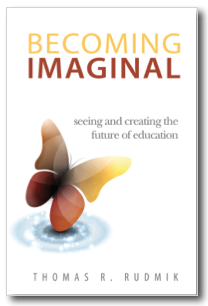
I had the pleasure of spending this past summer as the editor of this newly released book on the future of education. It is entitled, Becoming Imaginal: Seeing and Creating the Future of Education, written by educator, entrepreneur, and freedom-fighter, Tom Rudmik. Available on Amazon.com (including the Kindle edition) and iTunes, it is a must-read for anyone who is an educator, and frustrated with an outmoded education system and seeking a new solution. Rudmik maintains that the future of education will be created by Imaginal Leaders: those who have the ability to see into the future, and pull it back into the now. Those ILs he has drawn from are the likes of Steve Jobs, Gandhi, and Martin Luther King Jr. However, if you think that an IL is simply a unique kind of person, then you too need to read this book; for Rudmik shows that becoming an Imaginal Leader is for everybody when one actualizes one’s own unique creative spirit. How do you do this? This book provides countless models and elucidated processes that will take you step by step to becoming imaginal.

This book recently made its debut in Australia and Nigeria to glowing accolades by those educational freedom fighters for whom becoming imaginal is critical to transforming education, and fostering leaders who will go on to design the(ir) future.  Get your copy today!

Ian Goldin: Navigating Our Global Future

“The future is unpredictable”… 

This is one of the most poignant and striking TED Talks you will see–and it’s short: a mere 7 minutes long. Goldin is the Director of the Oxford School of the 21st Century and author of the book, highlighted later here at KulturDesignBlog, “Divided Nations: Why global governance is failing and what we can do about it”.

Watch and ask yourself how this future will impact your business, your industry, and your personal life.

This is the future that Kultur Design can help you navigate and leverage. Visit us at http://www.kulturdesign.ca

The Future: Six Drivers of Global Change

I first was introduced to Al Gore’s Six Drivers while working with him and a small group from the World Economic Forum in Switzerland, hence it was a delight for me to see that he had developed these observations six years later into the book featured here.

Design is not a linear act. It is not relegated to mere widgets and websites, as important as they may be. Design has a larger context, scope, and scale in the 21st Century where most of our actions have systemic impact on the larger world. We are more connected now than ever before, and thus how we “mark out” (design) the world has large-scale ramifications. This global system of ours makes, or ought to make, designers of all of us, whether it’s a new business strategy, a new building project, or even sending a simple text. Everything speaks now to the larger world that we are creating and is being created around us. To bring intent to this process of designing our world is more critical now than ever.

THE FUTURE -- COVER FINAL

We do not only design our world, our world designs us. Al Gore’s book “The Future: Six Drivers of Global Change” is one among many important books that can provide a perspective on how the systemic emergence of our actions over the past century is having an impact on our own lives.

  1. Emergence of an interconnected global economy that increasingly operates as an integrated holistic entity
  2. Emergence of planet-wide electronic communications grid connecting the thoughts and feelings of billions of people and linking them to rapidly expanding volumes of data. This includes the emergence of AI and “thinking machines” the most powerful of which are already exceeding human capacity at a growing number of tasks
  3. Emergence of a completely new balance of political, economic, and military power in the world radically different from the ‘equilibrium’ of US global leadership at latter part of 20th C. We are living in a different world in which through technology power is shifting away from centralized governmental bodies to ‘smart mobs’ linked together through emerging social network technology.
  4. Emergence of rapid unsustainable growth: Population, cities, resource consumption, depletion of topsoil, freshwater supplies, pollution flows, and unsustainable economic output
  5. Emergence of revolutionary new set of powerful biological, biochemical, genetic, and materials science technologies that allow us to reconstitute biological ‘matter’, and alter the physical form, traits,  characteristics, and properties of plants, animals, and people. Here we’re talking about the ways in which technology, e.g., will create conditions for humans to enhance their brains and bodies.
  6. Emergence of radically new relationship between aggregate power of human civilization and Earth’s ecological systems, and beginning of massive global transformation of energy, industrial, agricultural, and construction technologies. We have the technologies in place to solve the crises imposed by unsustainable sources of energy, but there is a long way to go before they become socially and politically ubiquitous.

I encourage you to read this book, whether you’re a business owner or executive or social entrepreneur. Use these points to create conversations with your colleagues to help you get a broader scope on your own work and plans for the future. Change is happening quickly. To be on the right side of it, you need to broaden your thinking and how you engage new ideas that may be radically different from your own. This is life in the Knowledge Economy. Al Gore’s book, and others I’ll be posting here, can practically help you.

If you are interested in how innovation, design, and group process can operate from a larger perspective to give you the advantages in your enterprise you’re looking for, then have a look at Kultur Design for more information.