
The Real Wolves Of Wall Street… Sir Tim Berners-Lee & The Nightmare Scenario

wolf_wall_street2

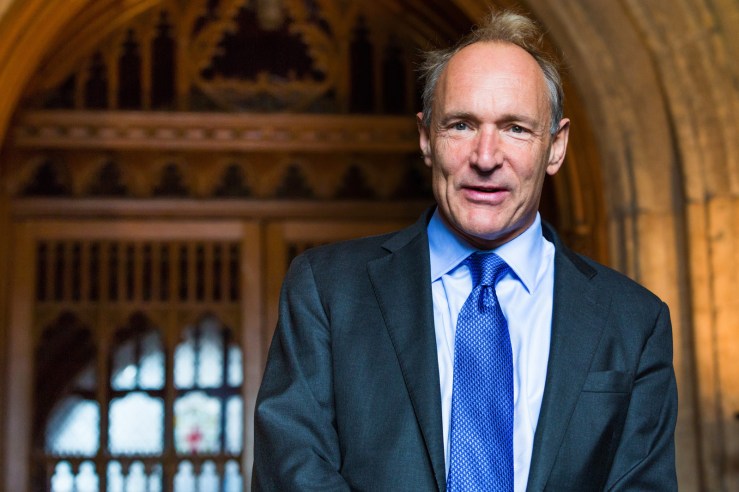
Sir Tim Berners-Lee, the architect of the world wide web, has come out with a nightmare scenario about AI running companies that eat everyone else for lunch, thus becoming the new masters of the universe.

Speaking at the Innovate Finance Global Summit, Berners-Lee laid out a number of scenarios, such as “When AI starts to make decisions such as who gets a mortgage . . . . Or which companies to acquire and when AI starts creating its own companies, creating holding companies, generating new versions of itself to run these companies.”

The scenario is a simple one to understand and project: take a bunch of artificial intelligence that are already programmed in all the important areas of business management, and watch them self-improve beyond human intelligence. It’s like Terminator meets The Wolf of Wall Street.

Berners-Lee continues, “So you have survival of the fittest going on between these AI companies until you reach the point where you wonder if it becomes possible to understand how to ensure they are being fair, and how do you describe to a computer what that means anyway?”
Sir_Tim_Berners-Lee

To me, ensuring fairness is the least of our worries in such a scenario. What will humans be doing in these companies run by hyper-intelligent AI? Cleaning toilets? Well, there’ll be a bot for that. Making and serving coffee? Well, there’ll be bots for that. Running numbers, setting goals, creating spread sheets or project management deadlines? Nope.

It’s like Terminator meets The Wolf of Wall Street.

In such a world humans will indeed be on some kind of universal income. This is the post-human age: the age of human obsolescence in what we call these days ‘work’. Will work look different? Maybe. But the issue will be human potential and human self-worth. We can always try to ‘chip up’ but AI will advance faster than humans.

As humans we are created for work, we are created to be productive. You don’t have to look too far and wide to see the high rates of depression associated with unemployment. The nightmare scenario is not what will happen when robots start buying up businesses and cleaning the human race’s clock, but what will happen to millions of humans when they are on unemployment insurance.

Nevertheless, Berners-Lee is right on track with his scenario planning. Some people and companies are seeing the writing on the wall and making new plans and creating new businesses for the future. If you’re not doing this already, you might be too late. If you think this is all sci-fi dog-chow and not taking this seriously, you need to rethink your position. This is real. It’s happening, and we have very smart prescient people sounding alarm bells. Will we listen and innovate to new solutions, or fold our arms and go out with a whimper?
Holoportation Is The Doorway Into A New World–Seriously.

starwars
Are we becoming less human? 
Sounds like a silly question, but when you look at how technology is developing, the kinds of things being developed, and where it all seems to be going, you get the sense that being human is on the road to obsolescence–without Elon Musk telling us it is so.

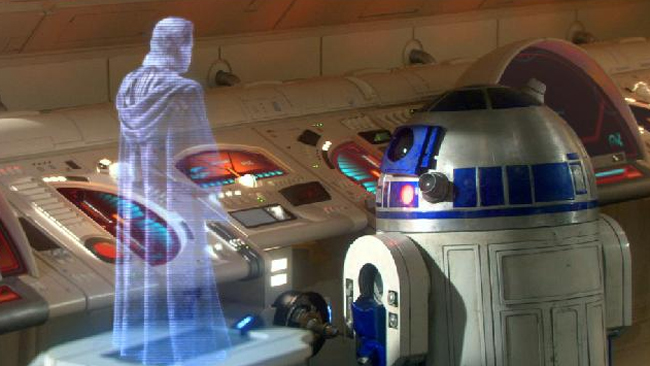
One striking example of this is “holoportation”–a terms Microsoft has created for its new hologram solution. As Wired describes,

Holoportation, as the name implies, projects a live hologram of a person into another room, where they can interact with whomever’s present in real time as though they were actually there.

And what inspired holoportation? The amount of time researchers had away from family, and the desire to reach out to them in a more effective way than merely Skype or FaceTime: “We have two young children,” said Izadi, one of the key researchers of the program, “and there was really this sense of not really being able to communicate as effectively as we would have liked,” Izadi says. “Tools such as video conferencing, phone calls, are just not engaging enough for young children. It’s just not the same as physically being there.” The way Microsoft has developed holoportation is to rig up a room with sophisticated 3D cameras that take images of every angle of the individual and the space he or she is in. Once all the images are captured, the custom software stitches them together into a full 3D image. 

Holoportation
Microsoft Holoportation Demo. Can you believe this stuff?!

But get this: to make the technology ubiquitous, Microsoft claimed all one would need is a VR headset. To accomplish this vision, Microsoft has hooked up with Intel to share their knowledge of how to build virtual reality headsets with other VR companies–a way to make this technology ubiquitous. And according to Ray Kurzweil, VR is key to immortality–yes immortality. Through holoportation, one can see how humans will transport themselves all over the world and even to other worlds.

 But there is certainly a difference between encountering a physical person and a hologram. I suppose one could see a technology developed that would trigger sensations in the brain to give one the feeling of being with a physical person while in virtual reality. But, again, is being with a physical person a difference that makes a difference for intimacy and overall human relationship? Is a holographic conversation with my child the same as actually being in the room with him? Is there something important about human connection?  What about when I am sad or hurting? Can a hologram really console me?

This will become ubiquitous, and it will become embedded technology–by that I mean in the brain. This is a doorway to a new world, and we need to be aware of its unintended consequences.

It also presents tremendous opportunity for businesses to design solutions for VR, from business to education. This is the future, and it will very quickly become the present.

Ian Goldin: Navigating Our Global Future

“The future is unpredictable”… 

This is one of the most poignant and striking TED Talks you will see–and it’s short: a mere 7 minutes long. Goldin is the Director of the Oxford School of the 21st Century and author of the book, highlighted later here at KulturDesignBlog, “Divided Nations: Why global governance is failing and what we can do about it”.

Watch and ask yourself how this future will impact your business, your industry, and your personal life.

This is the future that Kultur Design can help you navigate and leverage. Visit us at http://www.kulturdesign.ca