The Real Wolves Of Wall Street… Sir Tim Berners-Lee & The Nightmare Scenario

wolf_wall_street2

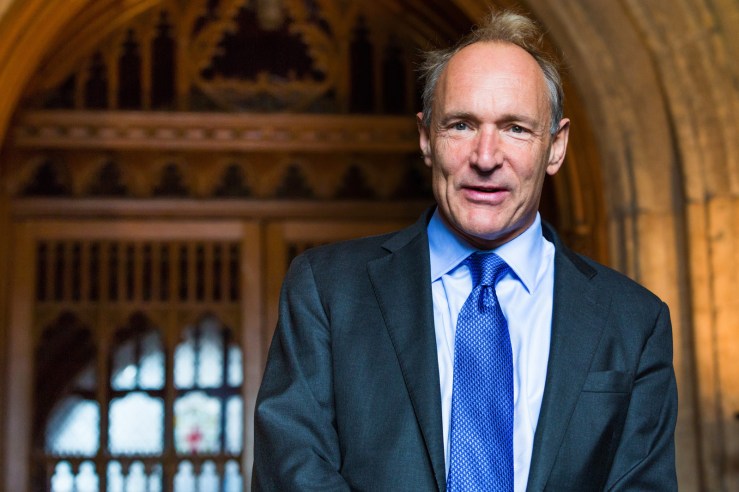
Sir Tim Berners-Lee, the architect of the world wide web, has come out with a nightmare scenario about AI running companies that eat everyone else for lunch, thus becoming the new masters of the universe.

Speaking at the Innovate Finance Global Summit, Berners-Lee laid out a number of scenarios, such as “When AI starts to make decisions such as who gets a mortgage . . . . Or which companies to acquire and when AI starts creating its own companies, creating holding companies, generating new versions of itself to run these companies.”

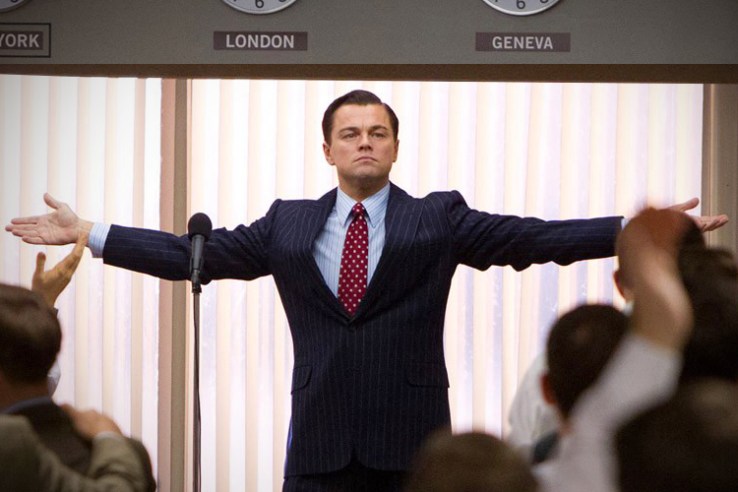
The scenario is a simple one to understand and project: take a bunch of artificial intelligence that are already programmed in all the important areas of business management, and watch them self-improve beyond human intelligence. It’s like Terminator meets The Wolf of Wall Street.

Berners-Lee continues, “So you have survival of the fittest going on between these AI companies until you reach the point where you wonder if it becomes possible to understand how to ensure they are being fair, and how do you describe to a computer what that means anyway?”
Sir_Tim_Berners-Lee

To me, ensuring fairness is the least of our worries in such a scenario. What will humans be doing in these companies run by hyper-intelligent AI? Cleaning toilets? Well, there’ll be a bot for that. Making and serving coffee? Well, there’ll be bots for that. Running numbers, setting goals, creating spread sheets or project management deadlines? Nope.

It’s like Terminator meets The Wolf of Wall Street.

In such a world humans will indeed be on some kind of universal income. This is the post-human age: the age of human obsolescence in what we call these days ‘work’. Will work look different? Maybe. But the issue will be human potential and human self-worth. We can always try to ‘chip up’ but AI will advance faster than humans.

As humans we are created for work, we are created to be productive. You don’t have to look too far and wide to see the high rates of depression associated with unemployment. The nightmare scenario is not what will happen when robots start buying up businesses and cleaning the human race’s clock, but what will happen to millions of humans when they are on unemployment insurance.

Nevertheless, Berners-Lee is right on track with his scenario planning. Some people and companies are seeing the writing on the wall and making new plans and creating new businesses for the future. If you’re not doing this already, you might be too late. If you think this is all sci-fi dog-chow and not taking this seriously, you need to rethink your position. This is real. It’s happening, and we have very smart prescient people sounding alarm bells. Will we listen and innovate to new solutions, or fold our arms and go out with a whimper?
What The Light Phone, iWatch, and Jacques Ellul Have In Common

lightphone2

I remember when I first read Jacques Ellul’s The Technological Society–I was deeply disturbed by his conclusion that the world of technology (technique, as he called it) would run amok, that humanity could never return to pre-technological civilization, that technology would simply run its course and overtake humanity. Quite a predicament by a philosopher who wrote the book in the 1960s!

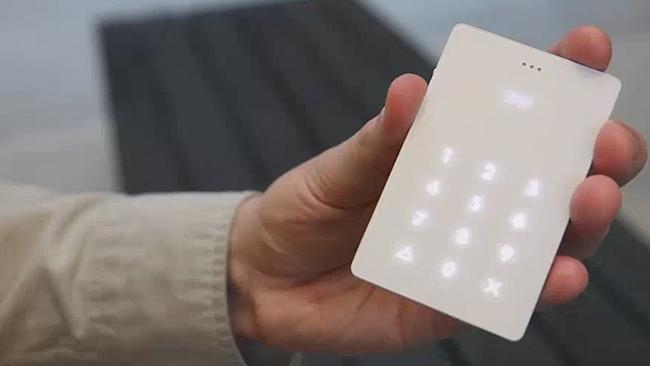
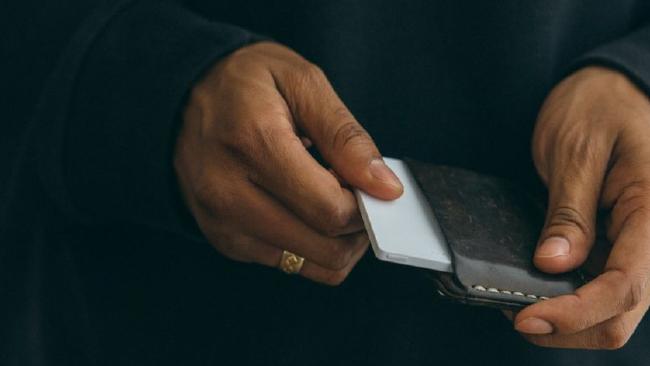
I haven’t thought about that book for a number of years, but it came to me today when I read an article in MIT Tech Review about the Light Phone: a simple phone that tells time and makes and receives phone calls–simple as that. To me, this is a wonderfully simple solution, but the writer of the review certainly didn’t think so.

lightphone1

The website describes the Light Phone as

a simple, second phone that uses your existing phone number. Leave your smartphone behind and enjoy peace of mind.

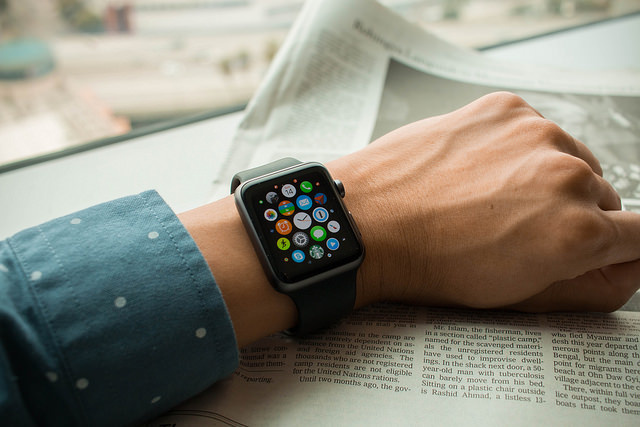
As a solution, the Light Phone reminds me of something I heard recently about the Apple iWatch. The iWatch is the antithesis of the Light Phone–to get data to your iWatch requires that you carry around your iPhone. To me this is too complex and gadgety. In our modern urbanized world, you shouldn’t have to take with you more devices than necessary. To wear something on your wrist that requires something else worn in your pocket to me is more of a capitalist ploy than a user-friendly solution.

apple.iwatch.1-640x427

Well, a couple of colleagues of mine have iWatches–and they love them. They are always the ones at lunches and dinners providing fee demos about the phone’s various functions, which I must add are quite convincing. If I had a thousand bucks burning a hole in my pocket I probably would have bought one already. But the more I hear about the iWatch, the more I am learning about it as a kind of hand-cuff rather than wearable solution. I know one person who came very close to purchasing one but too was held back by the price tag. One day he met up with a colleague who had one that broke.

“Did you enjoy having it?” he asked.

“Oh absolutely–I loved it!”

“So are you going to buy another one then?”

“No.”

“Why not? I thought you just said it was the best thing you had?”

“It was–until I didn’t have it around my wrist. When I had the watch on, I loved the functionality, I couldn’t get enough of it . . .”

“So then what happened?”

“When I could no longer wear it, I felt free! Free from that stupid thing! For whenever I wore the watch, I was looking at my wrist every 3 seconds, all day long! ‘Bling!’ check my wrist. ‘Bling!’ check my wrist. I’m telling you–I feel liberated without that stupid watch!”

But do people feel free when they lose or break their technology? Could you disconnect from your smartphone and/or watch for a day and feel cool about it? Is the Light Phone a fantasy, a utopia, or a serious solution for the 21st Century?

The individual is in a dilemma: either he decides to safeguard his freedom of choice, chooses to use traditional, personal, moral, or empirical means, thereby entering into competition with a power against which there is no efficacious defense and before which he must suffer defeat; or he decides to accept technical necessity, in which case he will himself be the victor, but only by submitting irreparably to technical slavery. In effect he has no freedom of choice.
Jacques Ellul, The Technological Society

This leaves us pondering Jacques Ellul. Technology keeps running amok, and there’s nothing we can do about it. Even when given a choice to have or not have it, we can’t live without it.

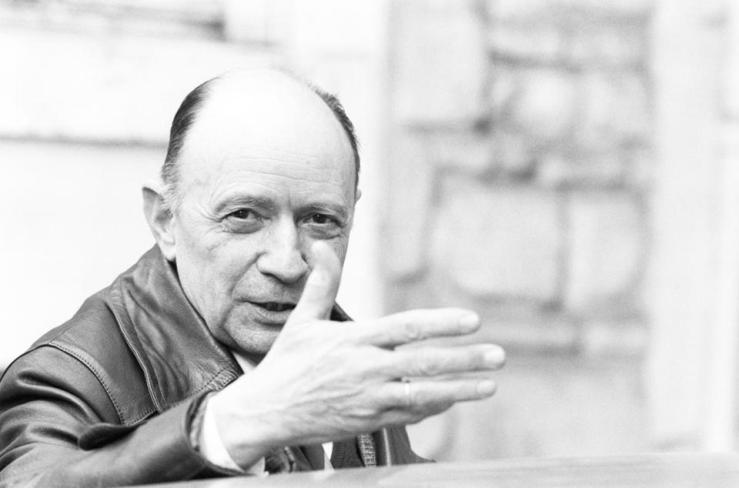
jacques ellul
Jacques Ellul predicted the Technological Society would run amok functioning without human intervention.

To me, the Light Phone is a fantasy, a product fetish. It points backward to a time when human life was perhaps simple. It is a fantasy of regress, rather than a solution of progress.

Would I choose a Light Phone? Maybe in another time and place. I like simplicity. I like to think of myself as a simple guy. But I live in a world that demands my time, demands that I am immediately updated and responsive to the information coming at me 24/7. I would like to choose a different life, but that would require that I change what I do. It would require that I enter a simpler life. Perhaps the Light Phone is a symbol of that simpler life, of that utopia (and by the way, ‘utopia’ means ‘no place).

So while I judged the MIT Review columnist for her disdain for the Light Phone, I had three fingers pointing back at me.


Holoportation Is The Doorway Into A New World–Seriously.

starwars
Are we becoming less human? 
Sounds like a silly question, but when you look at how technology is developing, the kinds of things being developed, and where it all seems to be going, you get the sense that being human is on the road to obsolescence–without Elon Musk telling us it is so.

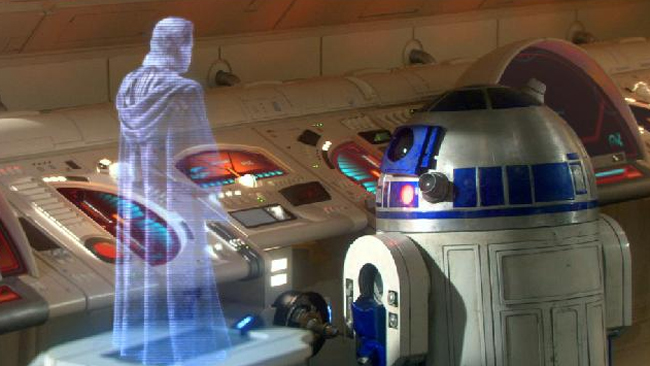
One striking example of this is “holoportation”–a terms Microsoft has created for its new hologram solution. As Wired describes,

Holoportation, as the name implies, projects a live hologram of a person into another room, where they can interact with whomever’s present in real time as though they were actually there.

And what inspired holoportation? The amount of time researchers had away from family, and the desire to reach out to them in a more effective way than merely Skype or FaceTime: “We have two young children,” said Izadi, one of the key researchers of the program, “and there was really this sense of not really being able to communicate as effectively as we would have liked,” Izadi says. “Tools such as video conferencing, phone calls, are just not engaging enough for young children. It’s just not the same as physically being there.” The way Microsoft has developed holoportation is to rig up a room with sophisticated 3D cameras that take images of every angle of the individual and the space he or she is in. Once all the images are captured, the custom software stitches them together into a full 3D image. 

Holoportation
Microsoft Holoportation Demo. Can you believe this stuff?!

But get this: to make the technology ubiquitous, Microsoft claimed all one would need is a VR headset. To accomplish this vision, Microsoft has hooked up with Intel to share their knowledge of how to build virtual reality headsets with other VR companies–a way to make this technology ubiquitous. And according to Ray Kurzweil, VR is key to immortality–yes immortality. Through holoportation, one can see how humans will transport themselves all over the world and even to other worlds.

 But there is certainly a difference between encountering a physical person and a hologram. I suppose one could see a technology developed that would trigger sensations in the brain to give one the feeling of being with a physical person while in virtual reality. But, again, is being with a physical person a difference that makes a difference for intimacy and overall human relationship? Is a holographic conversation with my child the same as actually being in the room with him? Is there something important about human connection?  What about when I am sad or hurting? Can a hologram really console me?

This will become ubiquitous, and it will become embedded technology–by that I mean in the brain. This is a doorway to a new world, and we need to be aware of its unintended consequences.

It also presents tremendous opportunity for businesses to design solutions for VR, from business to education. This is the future, and it will very quickly become the present.

7 Striking Reasons Why Your Organization Needs More Designers

designers

There is a surging demand for designers, particularly in Silicon Valley. More Fortune 500 companies are buying design firms than ever before. And designers are being hired by venture capital firms not to design logos, but to take part in the process of finding the best investments.

Why are designers so important? Why should you, if you’re a manager or entrepreneur or business owner seek to hire more designers? Here are a few reasons:

  1. Vision: Design is a process of having a vision for something that doesn’t yet exist and pulling it into reality. Designers have an amazing ability to see new ideas and try them out. Companies today need designers as a response to the world of rapid change and complexity. Organizations today need people who are able to see new ways of doing things, new concepts, new realities, and then be bold enough to try them out.
  2. Iterative: Design is an iterative process. It doesn’t seek to get the solution right the first time, rather it is a process of trying, failing, failing again until the solution emerges. Designers are trained to create a hundred thumbnail sketches for a single concept in only an hour. Their ability to create a concept, scratch it out and create a better one is important in a competitive marketplace that demands a perpetual stream of new ideas and solutions.
  3. Creativity: Designers have an amazing way to think outside the conventional. Whereas engineers like to work in structures, designers will often deconstruct restraining forces before coming to a solution. And contrary to builders who just need the drawings to build, designers know that for the drawings to be inspiring and lead to a user-friendly solution, there needs to be a process of play and trial and error.
  4. Not afraid to fail: Designers are used to failing all the time–it’s part of the iterative process of the work. A designer can recreate and recreate and recreate again. If something doesn’t work and a designer’s work is criticized, no problem: the designer will either keep iterating, or flat-out reject the criticism and continue on. Where ideas and solutions are demanded, you need people with thick creative skin who aren’t afraid to come out of left field and be critiqued for it.
  5. User Experience: Designers are all about user experience and finding solutions to problems. A designer seeks to make a current experience better, easier, more fluid, or to create something new to meet a particular demand. The iPhone came out of Steve Jobs’ disgust at how poor the user experience was for his mobile phone. People want products that respect them; that make it easy for them to use. Designers know how to do this.
  6. The world is designed: The modern world contains more human design than any other time in history. In fact, design makes designers of us all. To design means ‘to mark out’, which makes designers of all of us (Drink a bottled water to see what I mean). And because of this, you need people who understand the language of design and how to create things that stand out from the rest of the designed world.
  7. Integrators: Design is often an integrative art. A good designer can integrate a variety of styles and solutions and concepts into a single solution. Take Frank Lloyd Wright’s architecture: it was often a fusion of different styles and cultural expressions (Japan meets Bauhaus), but that’s what made his houses so rich and textured. In a fragmented world, you need designers who can integrate seemingly disconnected ideas and frameworks into an integrated whole.

Ian Goldin: Navigating Our Global Future

“The future is unpredictable”… 

This is one of the most poignant and striking TED Talks you will see–and it’s short: a mere 7 minutes long. Goldin is the Director of the Oxford School of the 21st Century and author of the book, highlighted later here at KulturDesignBlog, “Divided Nations: Why global governance is failing and what we can do about it”.

Watch and ask yourself how this future will impact your business, your industry, and your personal life.

This is the future that Kultur Design can help you navigate and leverage. Visit us at http://www.kulturdesign.ca

Change & Complexity

Change & Complexity
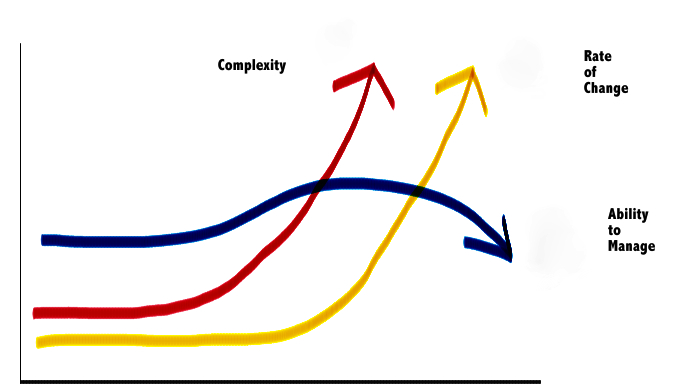
The surging of change and complexity, which overwhelm our ability to manage it through conventional ways of thinking and decision-making. To be on the right side of change requires new ways of thinking and doing: Collaboration, rapid solutions, and innovation.

Collaboration Rapid Solutions Innovation

This is the official blog of Kultur Design, a strategy and innovation company that helps organizations solve complex problems and leverage breakthrough ideas.

We dwell in a rapidly changing and complex world, driven largely by technology. Technology is a system unto itself, under which all of our modern institutions are subsumed and linked together across the globe. This system is a rapidly adaptive and formidably complex one.

This new system places a premium on collaboration:  the bringing together of large(r) groups of people with different ways of seeing the organization and the world, the diversity of which can be leveraged into a requisite solution.

It is often the case that we make decisions only to realize that they were for the Age of Yesterday, rather than what they need to be for: The Age of Tomorrow. This requires the ability to create rapid solutions through prototyping and iteration.

Innovation is the application of creativity to challenges and opportunities. It is a critical antidote to change and complexity. Any organization wishing to be viable in the 21st Century must have a philosophy and culture of innovation.

Why design? Because design is a primary function of our modern world, wether it’s a widget, website, information archive, or city street. Our world is becoming more and more a product of human design. To change our world for the better requires a way of thinking about it and engaging it as a designer would: with intent, creativity, and an eye on the future

This blog is an exploration into this world of rapid change and complexity, created to provide insights and new ways of thinking about the future and how one goes about adapting to it, whether in business or in one’s own creative life.